

Former Swiftie (Un)relunctantly Reviews ‘The Encore’
Managing Opinion Editor Caroline Flinn ʼ28 does a deep dive into Taylor Swiftʼs latest album, “The Encore of The Life of a Showgirl,” reviewing each song. She explains her journey of listening to the album after taking a hiatus from Swiftʼs music, despite being a huge fan as a child.
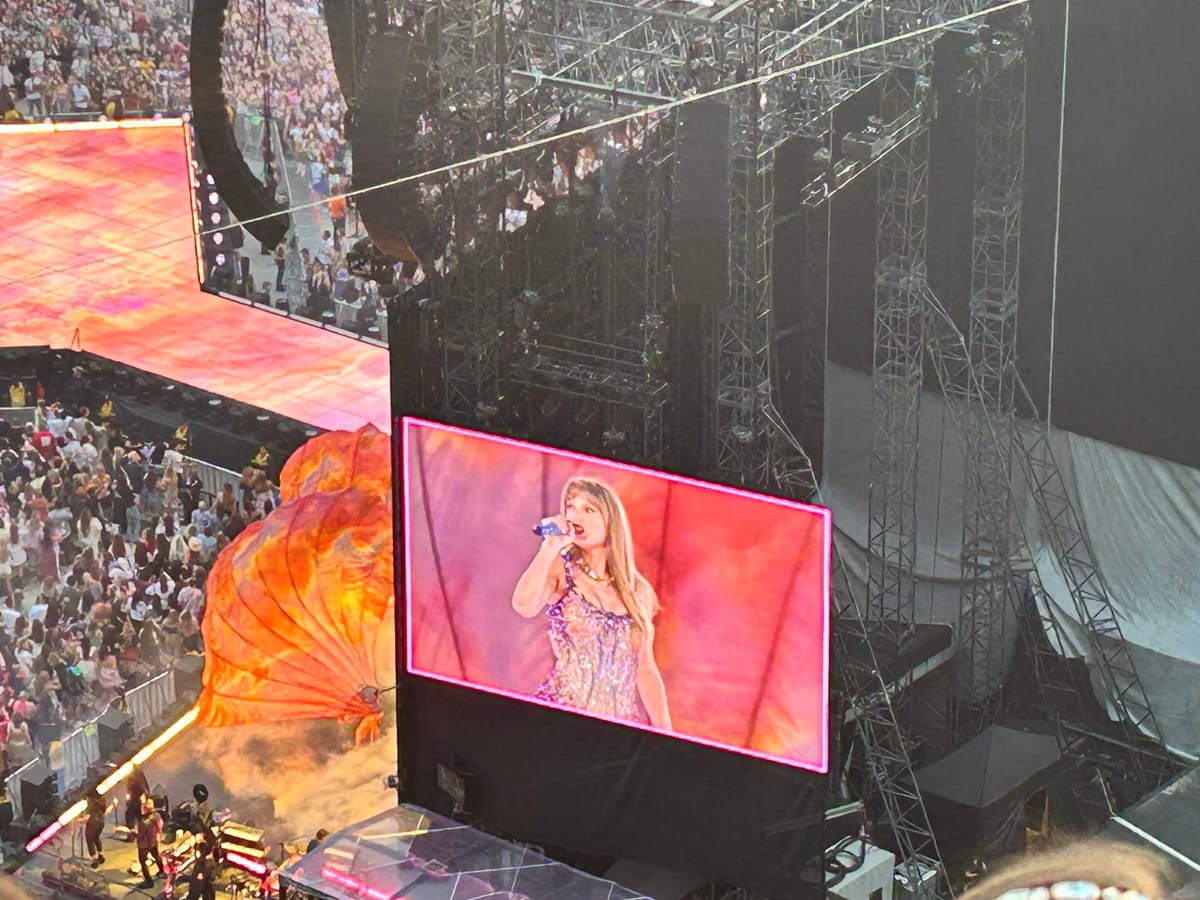
Iʼm not entirely sure how I got here, but after “The Encore of The Life of a Showgirl,” her newest album, came out, I somehow ended up on both Swiftie TikTok and very much not Swiftie TikTok. After listening to these songs more times than any non-Swiftie-adjacent person reasonably should, I figured I might as well review them. Itʼs basically the deluxe of an album that is, against my will, possibly growing on me (ugh, and I claim to have good music taste), as I had a dream about the “Patient Zero” music video. That said, I still donʼt like it. I listened to these songs multiple times, which I know I didnʼt have to do, but I think itʼs funny, so I am doing it anyway. Letʼs rate song by song through “The Encore.”
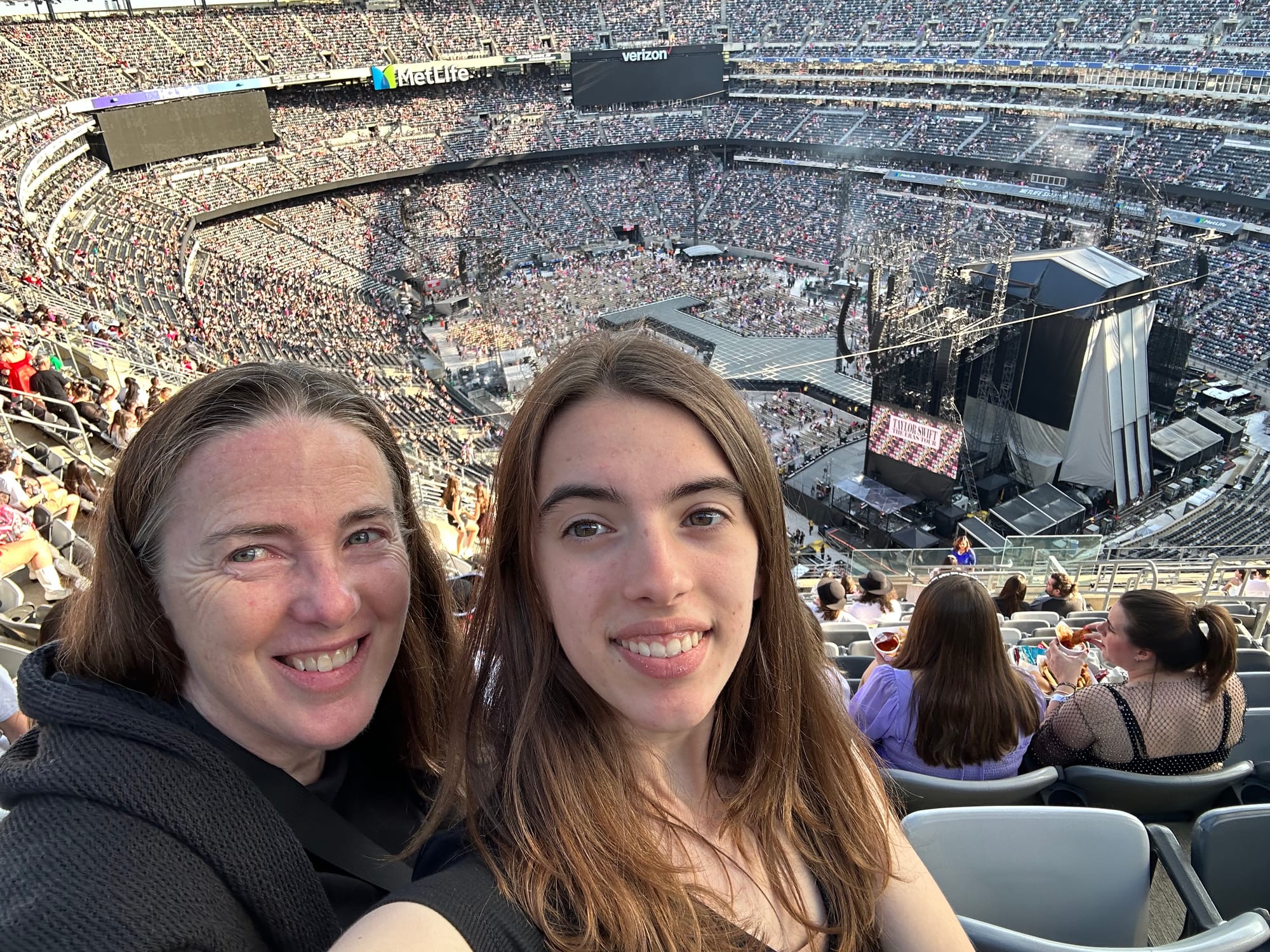
For my qualifications to be rating this, I grew up listening to Taylor Swift on my Hello Kitty CD player. Though, to be very clear, I wouldnʼt categorize myself as a Swiftie now. I listened to her debut album, and I listened to “Fearless” and “Speak Now” religiously. I checked “1989” out from the library. By the time “Reputation” came out, I was embarrassed to be listening to Swift. So I stopped listening to her and missed every album after that until “Midnights,” when I sort of decided to buy into that. Then, in 2023, I randomly went to the Eras Tour (East Rutherford Night One). I had the time of my life. And then, somehow, I became a Swiftie again. Or a Swiftie-adjacent person. I never really bought into the parasocial side of things: the people making elaborate claims about her life despite not actually knowing her. But I do have a nine-hour playlist of her songs that, if Iʼm being honest, I still listen to when I want to feel nostalgic. I became aware of the rest of her albums and her lore, or at least the lore people thought they knew about her, thanks to social media.
“Patient Zero”
This was the first single announced from “Encore,” and honestly, I think it was a strange choice. The entire song revolves around the central idea of “I was patient zero,” meaning she was the first woman to deal with whatever charming, toxic man the song is about. The metaphor immediately got people arguing online because “patient zero” is a phrase most commonly associated with disease outbreaks, particularly AIDS, and more recently Covid-19. Whether thatʼs a fair criticism or not, Iʼm not sure.
The chorus doesnʼt help either. Every time the repeated “if you want to party” line comes around, it gets on my nerves because it feels like such a lazy placeholder rather than an actual lyrical idea. Not revealing anything new about the story, character, or emotion of the song, it just fills space, and for a songwriter whoʼs usually capable of much sharper hooks, it comes across as surprisingly weak writing.
The bigger problem for me is that the song just doesnʼt sound very good. Iʼve seen gorgeous covers floating around TikTok and YouTube where people strip it down to piano or acoustic guitar, and suddenly the song starts to make sense. The lyrics are a little spoken-word-y, which is a style I can actually get behind when Swift commits to it.
But the production here is doing absolutely nothing. It feels overcooked and weirdly sterile at the same time. Max Martin is doing ... something. I am not qualified to say exactly what that something is, but I donʼt like it. Lyrically, the song is mostly Swift warning another woman about a man she previously dated. The fan theories are already everywhere. Some people think itʼs about Scott Borchetta, her first manager, since she was effectively his “patient zero” and their relationship ended with the masterʼs dispute. Others think itʼs about Joe Alwyn due to the anxiety in their love seen on the album “Lover.” Personally, I donʼt find either interpretation all that interesting because the song never gets specific enough to make me care. Thatʼs kind of my issue with “Patient Zero” as a whole. The idea is stronger than the execution. There are flashes of clever writing and a few lines that made me think, “okay, thereʼs a good song buried in here somewhere.” But by the end, all I could think about was how much Iʼd rather be listening to one of those stripped-down covers instead. This is my second favorite song on the album.
“Cleveland!”
This song sucks. I spent a while trying to figure out why it sucks. Is it because I secretly hate seeing Swift happy? Is it because Iʼve spent so many years listening to her write about heartbreak that a straightforward love song feels unnatural? Maybe a little. But honestly, I think the simpler answer is that the writing just isnʼt very good. Iʼve seen people online questioning how genuine Swiftʼs relationship with Travis Kelce is because she seems almost aggressively focused on telling us how happy she is. I donʼt really buy that argument. People express love differently, and being annoyingly in love is not actually evidence that a relationship is fake.
My problem with “Cleveland” isnʼt that Swift is happy. Good for her. My problem is that she somehow turned that happiness into one of the least interesting songs on the album. Right from the beginning, something feels off. The intro genuinely reminds me of “The Office” (U.S.) theme song, which is not a comparison I ever expected to make about a Swift track. Maybe that was the intention. If so, it didnʼt work for me.
Ironically, I actually like the lyrics of the first verse. The song opens with a series of criticisms aimed at Swift, and while theyʼre exaggerated, they pull from real conversations people have had about her for years. She gets judged for absolutely everything. At various points, people have called her a secret Republican, a MAGA supporter, calculating, fake, attention-seeking, and somehow simultaneously too political and not political enough. The problem is that once the song moves beyond that setup, it falls apart. The chorus is unbelievably weak. “But my baby likes what he likes” is repeated over and over as if repetition alone can turn a sentence into a hook. The title lyric about Cleveland feels like itʼs supposed to be charmingly specific and very ironic in that Cleveland is Cleveland (who wants to go there), but it never develops into anything more meaningful than “my boyfriend showed me his hometown.” Thatʼs fine as a detail, but itʼs not enough to build the emotional center of an entire song around.
And thatʼs really the issue with “Cleveland.” Itʼs a song built almost entirely on the idea that one person loves her despite all the criticism. That could have been a great concept. Instead, it feels like Swift chose the most obvious possible way to express it. Compare these lyrics to the writing on “Folklore” or “Evermore,” where even simple emotions are filtered through vivid imagery and memorable storytelling. Here we get lines like “he likes what he likes, what he likes, and he likes me,” which honestly sounds less like Swift and more like someone trying to parody a Swift love song.
To be fair, I donʼt think every Swift song needs to sound like a lost “Evermore” track. One thing that annoys me about online music discourse is the assumption that every lyric needs to be poetry. Some of Swiftʼs best songs are fun, goofy, and uncomplicated. The difference is that those songs are still catchy and self-aware enough to justify their simplicity. “Cleveland” isnʼt. Itʼs not bad because itʼs lighthearted. Itʼs bad because itʼs lazy.
“Pink Clouding”
If “Cleveland” is the albumʼs attempt at a big, uncomplicated love song, “Pink Clouding” is its attempt at an apology. Itʼs one of the more emotionally interesting songs on “Encore,” even if I donʼt think itʼs one of the strongest. Before even talking about the music, I have to address the discourse surrounding this song, because it is genuinely insane. There are people online who are absolutely convinced this track is Swift apologizing for not publicly coming out as a lesbian during the “Lover” era. The primary evidence seems to be the opening verse: “Met the magenta sunrise / Fuchsia forever intertwined / Threw the rosewood on the fire …” The argument is that the color imagery resembles the lesbian flag. Iʼm sorry, but at a certain point weʼre just assigning crap to the color pink. Not every mention of magenta, fuchsia, or rose automatically turns a song into a secret coded confession.
Could it be intentional? Sure. Is there enough evidence in the actual song to confidently make that claim? Absolutely not. Part of this comes from the fact that the “Lover” era generated a massive amount of “Gaylor” speculation. For years, some fans have believed Swift and model Karlie Kloss were romantically involved, and every new song gets filtered through that lens. But I think “Pink Clouding” demonstrates why that approach can become exhausting.
What interests me more is the title itself. Pink clouding is a real term used in addiction recovery. It refers to a period of euphoria where someone feels almost unrealistically optimistic and convinced everything is okay. Given that Swift has referenced alcoholism and unhealthy coping mechanisms in previous work, for example, in a song called “Fortnight” on “The Tortured Poets Department,” that interpretation feels much more useful to me than trying to decode color palettes.
The song itself seems fairly straightforward. Swift is looking back on a relationship where she made promises she couldnʼt keep. The recurring idea is that she wasnʼt intentionally cruel, but she was so caught up in the thrill of the relationship that she couldnʼt see reality clearly. Years later, sheʼs still haunted by the fact that someone good got hurt in the process. That makes the song fertile ground for fan theories, of course. Some listeners have pointed to her ex-boyfriend actor Tom Hiddleston because the timeline loosely matches the idea of a brief, intense relationship that ended with lingering guilt. Others could probably make a case for nearly any ex in her catalog. Personally, I donʼt think it matters very much. We donʼt know these people. We donʼt know Swift. Treating every lyric as a breadcrumb leading to a specific boyfriend or girlfriend usually tells us more about the fans than it does about the song.
What I do like about “Pink Clouding” is that it contains actual self-reflection. Musically, Iʼm less enthusiastic. The chorus is fine, but the repeated “ha ha ha” ad-libs feel oddly distracting; the song doesnʼt trust the writing enough to stand on its own. And while the central metaphor is clever, Swift never really pushes it as far as she could. The idea of “pink clouding” is rich with possibilities, but the song mostly explains the metaphor rather than exploring it. Still, I canʼt bring myself to hate “Pink Clouding.” It’s not great, but itʼs not embarrassing either. Itʼs just sort of a song. Still, itʼs my third favorite.
“Babylon”
The word Babylon immediately made me think of “Cowboy Like Me,” which contains one of my favorite Swift lyrics: “Now you hang from my lips like the Gardens of Babylon.” Maybe thatʼs why I was predisposed to like this song.
I donʼt have a ton to say about it other than: itʼs good. Not my favorite on “Encore,” not a masterpiece, but good. I think if this exact song had been released on “Folklore” or “Evermore,” people would be calling it an underrated masterpiece. The lyrics are poetic, especially the line, “You never knew that it was Babylon ʼtil it was gone.” It is a simple song about not appreciating something until youʼve lost it, and it works.
Conclusions
So, what do I think about “Encore”?
I think itʼs fine. 4/10.
Thatʼs maybe the least dramatic conclusion possible after spending hours reading Swiftie theories, anti-Swiftie theories, and listening to people argue about every lyric as if they are lawyers presenting evidence before a jury. Overall, I donʼt think this is Swiftʼs best deluxe or best anything, but I also donʼt think itʼs the disaster some people want it to be.
And that brings me to my final thought. I think itʼs completely fair to dislike Swiftʼs music. Music is subjective. If her songwriting annoys you, if you hate her voice, if you think sheʼs overrated, thatʼs fine. There is nothing more annoying than being told you have to like a musician.
What I find strange is the specific ways people choose to hate Swift. Yes, there are no ethical billionaires. Swift is a billionaire. I think thatʼs worth criticizing. Sheʼs not above criticism. But when the conversation becomes “sheʼs not a ‘girlʼs girl’” or treating her as uniquely evil because of a private jet flight while there are corporations, politicians, executives, and celebrities doing far more damage with far less scrutiny, it feels to me like yʼall are just hating to hate, which I think is not productive. Maybe this is a whole separate article, but sometimes it feels like Swift has become a stand-in for peopleʼs frustrations with celebrity culture, wealth, and womanhood itself. Sheʼs famous enough that people project basically anything onto her. To Swifties, sheʼs a genius. To her haters, sheʼs the root of all evil. The reality is probably much more boring (stop being so parasocial, guys; we donʼt actually know too much about her). Sheʼs a musician who has written some great songs, some bad songs, and one song about a guy named Drew that was playing through my Hello Kitty CD player when I was eight years old.
Anyway, those are my thoughts on “The Encore.” I came into this article as a former Swiftie who was mildly embarrassed to admit that. I am leaving it exactly the same way.



Comments ()