

Inside the Red Room: Financial Aid, Board of Trustees, and Student Center Concerns!
Association of Amherst Students President Charles Tufenkji ’28 and Vice President Joey Supik ’27 discuss recent financial aid developments, plans to revitalize the college website, and ways for students to share feedback on the Ford Student Center in the recent installment of their column.
Hello everyone, AAS here again! We’re grateful to those who gave our last article a read. Over the past week, we’ve received a lot of feedback from students and alums alike, so we’d like to tackle some of what we’ve heard.
Firstly, we wanted to talk about the college’s financial aid policies, some of which Toby Rosewater ’28 writes about in his article. Over the past two months, President Charles Tufenkji ’28 has been working with Amherst’s veteran students, Joey Cano ’28E and Joe Riegel ’29, to combat some of the issues they believed veteran students were facing at the college. While the concerns included more general quality-of-life issues, like housing and CARC-related programs, Charles wanted to handle the financial aid problems first. Charles worked with administrators like Dean of Students Angie Tissi-Gassoway and Dean of Admission and Financial Aid Matt McGann to help the veteran students ensure that disability income would no longer be considered in the financial aid office’s total income assessment.
We’ve also heard concerns regarding potential constraints and cuts on Amherst’s financial aid budget. In discussions with the College’s Finance team, they told us through email that “individual student financial need at Amherst is not decided based on a budget but rather based on assessments by the financial aid office for each individual student based on established processes and policies,” which has not changed. The team emphasized that the financial aid budget should be considered more as an estimate rather than a concrete number because of the need-blind admission process and case-by-case assessment. Most importantly, the team said in a private email that the College expects to “allocate approximately $2.1 million more to financial aid for students [for fiscal year 2027] versus fiscal year 2026.”
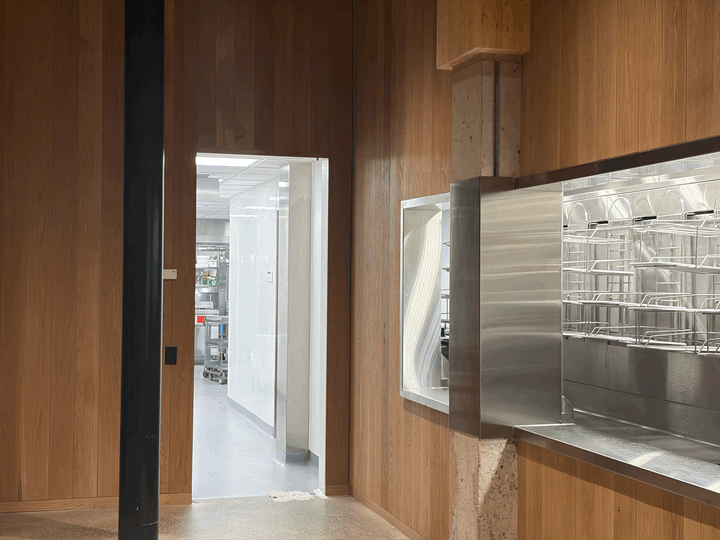
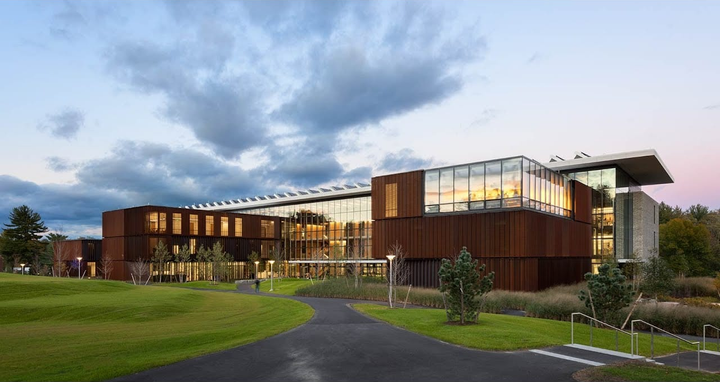
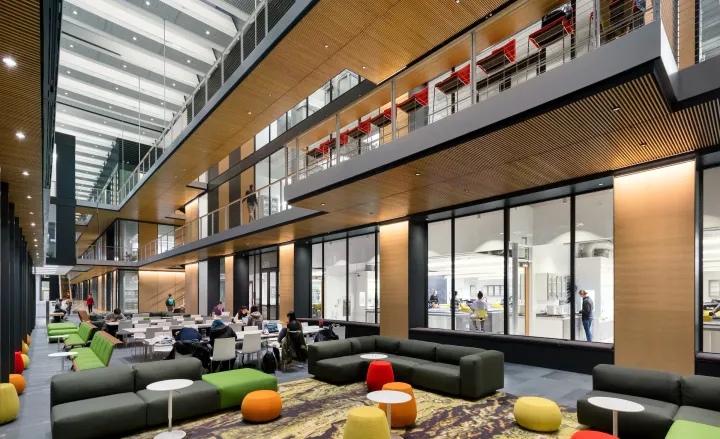
Moving away from financial aid, members of the AAS Executive Board and senator Ben Kasen ’28 had the opportunity to meet with several high-ranking administrators and alums for the grand opening of the Ford Student Center (Ford) and Betty’s Kitchen. In a private reception, we heard speeches from President Michael Elliott, the Chair of the Board of Trustees Chantal E. Kordula ’94, a representative from the Swiss architectural firm Herzog & de Meuron, and others. While the speeches congratulated certain members of the college for their hard work in executing the student center project, they also centered around excitement for how students will use the space and “make it their own.” After the speeches, our members discussed important issues with the Board of Trustees, such as AI usage, grade deflation, Amherst traditions, and more. In our conversations, the trustees emphasized their own lived experiences as students for why they enjoy serving on the board. We also learned that the entire board is composed of Amherst alumni, which is not only unusual for most colleges and universities’ boards of trustees, but also for Amherst, as they usually have one non-alum serve on the board.
As for student issues, we’re grateful to those who came to our tabling last Tuesday and would like to update you all on the feedback we’ve received.
We’re taking track of these suggestions, complaints, and positive reinforcement in a Google Document available to all current students here. The document has every single piece of feedback students give us throughout the academic year, sorted by the category in which we will address the issue. If we have finished tackling an issue, implementing a fix, or asking the administration a question, students will see it written in the “DONE” section. If we weren’t able to follow through on some feedback, we will put it in the “Stopped/Postponed and why” section and provide an explanation.
AAS wants to provide a way for students to hold us accountable for the feedback we receive, and we’d like to take the time now to give you developments on three things we were asked about.
First, a recurring issue is the administration attempting to take away universal keycard access. Last year, Charles, as part of the previous AAS Executive Board, was invited to serve on a committee whose purpose was to change policy and remove universal keycard access, preventing students from entering any dorm that wasn’t their own. Charles pushed back against this policy proposal, citing the value our open-campus structure gives students and the various benefits it entails. These discussions have been in debate for the past year, but ultimately, the administration told us that they are no longer pursuing taking away universal keycard access.
Second, menstrual products are integral items for many students, and AAS would like to reaffirm its commitment to creating greater access to these personal care products. As part of our operating budget, we dedicate $5,000 for other offices and organizations, like the Women’s and Gender Center (WGC), to buy menstrual products for student use around campus. From conversations with administrators and the WGC, we believe the issue is not that we don’t have enough menstrual products, but that we don’t have enough people to distribute them around campus. As we settle into our new spaces in Ford, certain senators will help guide conversations around expanding the distribution of menstrual products and potentially help with distribution themselves.
Third, we’ve heard feedback about how up-to-date and useful the college website is. Dean Angie has informed us that the College’s Communications team will oversee a multi-year project to revamp and revitalize the website and its sub websites with the most up-to-date information. The end goal is to hopefully transform the website into something useful for students, alumni, and prospective students looking to understand what goes on at Amherst.
We hope that more students will reach out to us with their feedback by email (ctufenkji28@amherst.edu or jsupik27@amherst.edu) or in person, and we highly encourage students to reach out to our Food Systems or recently formed Ford Student Center committees for specific issues pertaining to those areas. For Food Systems, you can reach out to Austin Brown ’28, Tony Wang ’29, Elizabeth Aniello ’29, or Ben Kasen ‘28. For the Ford committee, reach out to Chloe Lee ’28, Beckett Lawrence-Apfelbaum ’29, or Rohan Sharma ’27.
Comments ()