

Living in a College Town: Reflections From Residents
With increasingly charged debate on the role of higher education nationwide, Editor-in-Chief Emerita June Dorsch ’27 and Staff Writer Matthew Fisher ’26 spoke to residents of the greater Amherst area on their perspectives on living in a college-dense town.
More than 300 colleges and universities have closed since 2008, including, most recently, Hampshire College. A 2025 Pew Research Poll reported that seven out of 10 Americans believe higher education is generally moving in the wrong direction. While the report also said that Republicans tend to have a more negative view than Democrats, a significant percentage of people from both parties have a poor view of higher education in several specific areas, such as “preparing students for well-paying jobs,” “exposing students to a wide range of opinions,” and “keeping tuition costs affordable,” which, in particular, has raised substantial bipartisan concern.
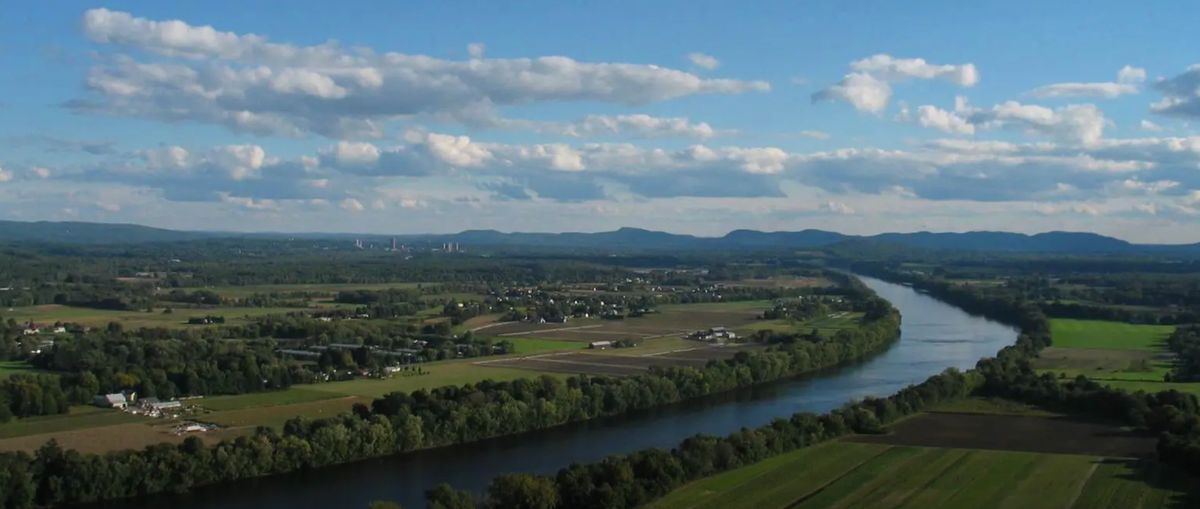
It is clear that colleges and universities are at a crossroads. The Student went to Atkins Farms Country Market, Walmart, and Big Y Foods and interviewed seven employees and shoppers, all of whom reside in the Connecticut River Valley, to understand how neighbors of the Five Colleges feel about the institutions themselves, their impacts on the area, and the broader national implications of Hampshire’s closure.
Brian C. is the meat and seafood manager at Atkins Farms and has lived in the Connecticut River Valley his whole life. For him, the Five Colleges are crucial to the area’s identity. “It wouldn’t be Amherst if there wasn’t Amherst College,” he said.
Anne McLaughlin, a former student at both Smith College and the University of Massachusetts Amherst (UMass), has been a valley resident since 2000. McLaughlin said that the Consortium has had a positive impact on the area. “There [are] all kinds of activities, and smart people, and smart kids,” she explained.
Robin Pfoutz, a teacher at Hartsbrook Waldorf School and 18-year resident of Western Massachusetts, agreed. “[The colleges] give it character,” Pfoutz said. “It’s a huge part of the Pioneer Valley.”
Hampshire’s forthcoming closure raises important questions for the area and its reliance on higher education. Not only has it shaped the culture and community of Amherst for nearly six decades, but it is also a huge economic boost as the third-largest employer in the town. Several interviews with residents were conducted three days after Hampshire announced the closure. Many had not heard the news. Among those who knew, many found Hampshire’s closure disheartening.
“It’s a loss of a more alternative way of approaching education,” Pfoutz said. Having spent several years studying at Maharishi International University in Fairfield, Iowa, a school rooted in a non-traditional, “consciousness-based” education, Pfoutz appreciates less conventional approaches to education, including Hampshire’s.
Other residents, however, have a less positive view of Hampshire College. Jay, an employee at Walmart who has lived in this area her whole life, said living near Hampshire has been irritating, and she was apathetic to the school closing.
“We live right across from Hampshire College, and there are a lot of drunken parties that wander into my yard,” Jay said. “Obviously, it’s not every college student, but Hampshire College is not my kind of [place].”
Although Jay had issues with Hampshire College, she had a better experience with the other four in the consortium. Her mother worked at UMass when she was growing up. “[The campus] was kind of my playground,” Jay said.
However, she still has qualms about the direction higher education is going in. While she thinks higher education is important, she believes it has become unaffordable for the average American. “It’s unattainable. Unless you get a scholarship or come into money, it’s out of reach,” Jay explained.
Even McLaughlin, who praised the Five Colleges and their role in the region, acknowledged its prohibitive cost. “Colleges have just gotten so expensive, and they’re so fancy now. Everybody expects everything to be wonderful: beautiful gyms, the best food, and nice dorms. It's like an arms race,” McLaughlin said.
But she still emphasized how important she believes higher education to be, beyond the degree. “We need people [who] know how to think in this country,” McLaughlin said. “And I think that’s what you learn at college, how to think.”
Comments ()