

Stop and Smell the Flowers: A Student Guide to the Amherst Outdoors
As students arrive on campus for the new semester, Assistant Features Editor Caroline Paluska ’29 interviewed community members for their recommendations on how to best spend one’s fall.
As Amherst College enters into the full swing of fall semester and the leaves begin to turn, students will soon be seeking the best spots for studying and playing Spikeball on the First-Year Quad, as well as searching for spare moments to spend some time off campus. To help Amherst students make the most of the next few months, I interviewed Rania Aduoim ’25, the former president of Outing Club; Wes Nugerten, the wellbeing & outdoor initiatives coordinator; Adrita Islam ’29, a Tread Shed bike tech; and Kai Hafner ’29, an Amherst local to get a range of recommendations for places and activities that can make life in the Connecticut River Valley all the more enjoyable.
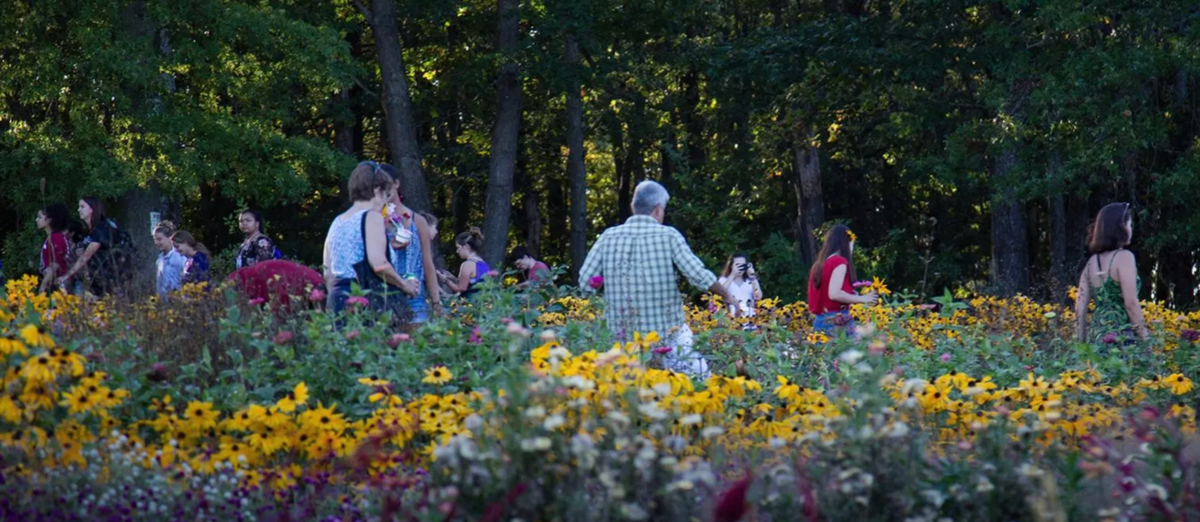
Everyone expressed appreciation for the time they’d spent at some of the more well-known spots across campus. There was a widespread love for Book & Plow Farm; all made special mention of Tuttle Hill and the surrounding scenery, from admiring the Holyoke Range during the day to stargazing at night. Nugerten suggested it was the perfect spot to bring a blanket and have a picnic. The Norwottuck Rail Trail was another popular spot.
Aduoim noted how both Book & Plow and the Rail Trail provide the chance to peacefully get away from the distractions of campus life, valuing the fact that they are “far away enough from other buildings and other people that you won’t be disturbed,” she said. Nugerten agreed: “It feels like you’re away from campus even while you’re still on campus land.”
A little farther off campus, Hafner spoke about how he has long loved biking to get ice cream at Hadley Scoop and Flayvors, rock climbing at Farley Ledges, swimming at the Hadley Reservoir, and enjoying the views of the valley from the summit of the Notch. Nugerten also appreciated hiking, mentioning Mount Sugarloaf, Mount Tom, Amethyst Brook Conservation Area, and Amherst’s own wildlife sanctuary as the sites of some of his favorite trails. Aduoim recommended kayaking or canoeing at nearby lakes and camping at Mount Toby. “I think camping is so much fun,” she said. “It’s not even about sleeping in a tent. It’s just about being outside with your friends, with pretty stars and a beautiful bonfire.”
Many activities they mentioned — like camping — require equipment that the average student does not have lying around in their dorm room. The Outing Club’s gear locker, however, is a wonderful resource open to everyone on campus. Aduoim highly encouraged students to utilize the countless resources in the locker, noting, “I don’t think most people realize how much [equipment] we have.” It contains gear for hiking, camping, backpacking, biking, climbing, and water sports. There are also kites, slacklines, hammocks, a unicycle, and even a collection of glow-in-the-dark lawn games. Aduoim mentioned that the Outing Club welcomes requests for items not yet a part of the club’s collection. The Outing Club regularly hosts open hours for the locker, which is tucked in the share basement of James Hall and Stearns Hall, so students can check out gear as needed. The hours can be found in the club’s GroupMe or listed in their email signature.
If going on a trip alone seems daunting, the Outing Club runs numerous trips at no cost to students throughout the semester, offering opportunities for everything from paintball to cave explorations. The club is constantly working to organize new trips as well; last year, Aduoim led the club’s first-ever skydiving trip. The Outing Club e-board also offers any student, regardless of their affiliation with the club, the chance to suggest and lead their own trips. “If you’re [someone] who loves hiking and wants to lead a hike, we can help you organize it, secure the funding, and figure out the sign-ups and transport. All you have to do is show up the day of” Aduoim said.
Nugerten also leads weekly hikes and occasional day trips in and around New England in his role as the wellbeing and outdoor initiatives coordinator. In the past, he has led hikes during the new and full moons, visits to prehistoric tracks left by some of the earliest known dinosaurs (paleontologists claim), and a day trip to Bluff Point State Park in Connecticut. He shared that one of his main goals is “to remov[e] barriers of access for people and [create] doors in their place.”
“I tend to think of being in nature from a perspective of holistic well-being,” he said, explaining why he values these trips. “[Rather than] siloing it within a recreational perspective, I like to think of both our mental and physical health, and all the benefits that we get from being outside. No matter who we are, I think we all feel that.”
A bicycle is another great way to get around and see the area. Amherst offers various ways to secure a bike. During the school year, the college runs a bike share where any student may borrow a bike after completing a quick training. Further, the Amherst College Tread Shed, located between Clark House and Cooper House, offers various pathways to bike ownership. One such pathway is the Sliding-Scale WORK-to-Own Bike Program, in which students can pay for all or part of a bike’s cost by completing volunteer hours at the garage. “If a student comes in and wants to fix up a bike, we can teach them the necessary skills. Or if they just need routine maintenance, we help them with that,” explained Islam, who helps run the program. “There are people who bike really intensely, [and] have their own bikes [that they] have taken care of for forever. There are also people who’ve never biked [or] owned a bike before. You find people with all levels of experience.”
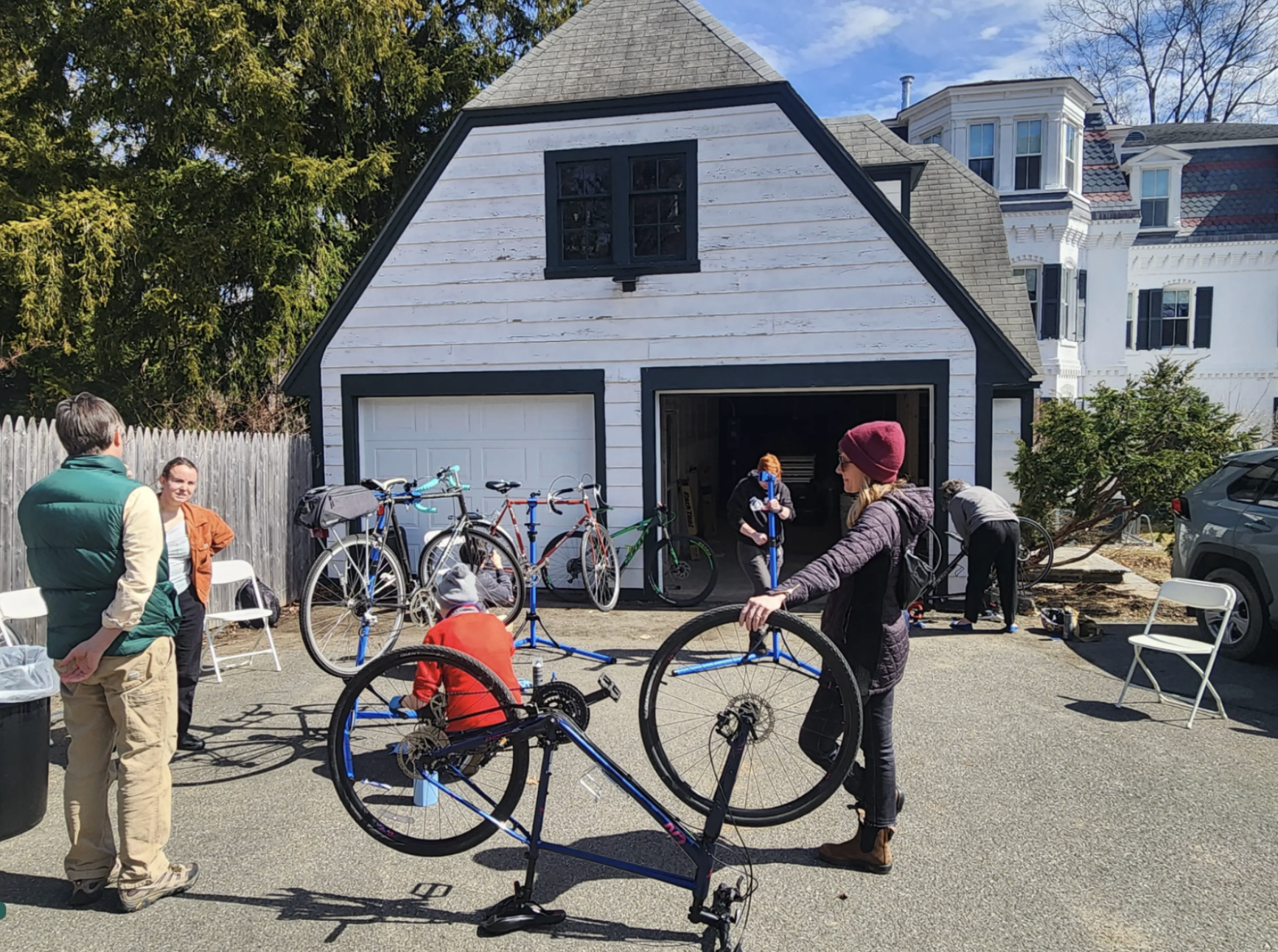
Islam described how biking changed for her after beginning college: “I’m an international student, and I used to live in a city where it was very congested all the time. Biking [was] my way of getting around [because] it wasn’t really possible to take a car. Yet, after I came to Amherst, I started biking [recreationally] because the rail trail is just so pretty.”
Aduoim shared a similar story. “I hadn’t even gone on a hike before coming [to] Amherst,” she recounted. “I’m from Queens, and I had never thought of myself as an outdoor[sy] person. But part of the reason I came to Amherst was that I wanted to experience a different [style] of life than New York City. [And so] I went on a couple of Outing Club trips. It was life-changing.”
From a picnic at Book & Plow to jumping out of a plane thousands of feet above the Pioneer Valley, Amherst certainly has no shortage of ways to spend some time appreciating the world beyond the catacombs of Frost Library. When reflecting on the importance of trying out new, fun experiences in and around Amherst — especially during the often intense academic semester — Aduoim recalled an incredible caving trip she took with The Outing Club. “I couldn’t believe I almost missed this beautiful, amazing experience [to study] for a damn math test,” she said. “I don’t even remember what the test was on.”


Comments ()