

Inside the Red Room: Test-Optional Policies, Budgetary Committee Updates and More!
In this edition of Inside the Red Room, Association of Amherst Students President Charles Tufenkji ’28 and Vice President Joey Supik ’27 discuss Dean McGann’s presentation on test-optional admissions, new Budgetary Committee procedures, and “make-up” Rave updates.
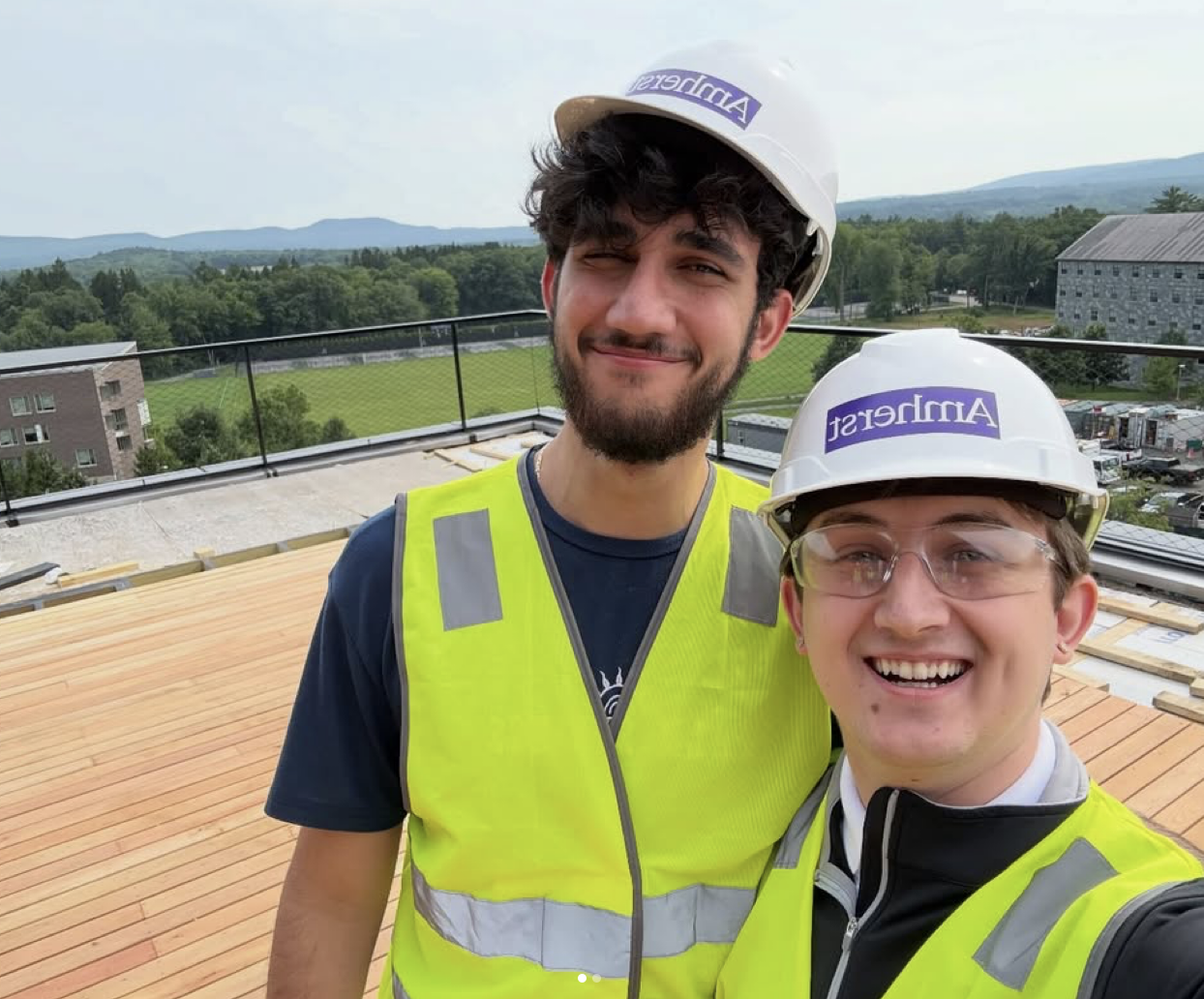
AAS President Charles Tufenkji ’28 and Vice President Joey Supik ’27 here! The next few weeks will be full of important updates and changes, so expect a few more articles and announcements from AAS.
Our first update revolves around the college’s new pass-fail policy. For journalistic integrity, we recuse ourselves from speaking about this update, as we also wrote an opinion piece about the policy. We encourage all individuals interested in the purely objective analysis and understanding of the pass-fail policy changes to read the news article.
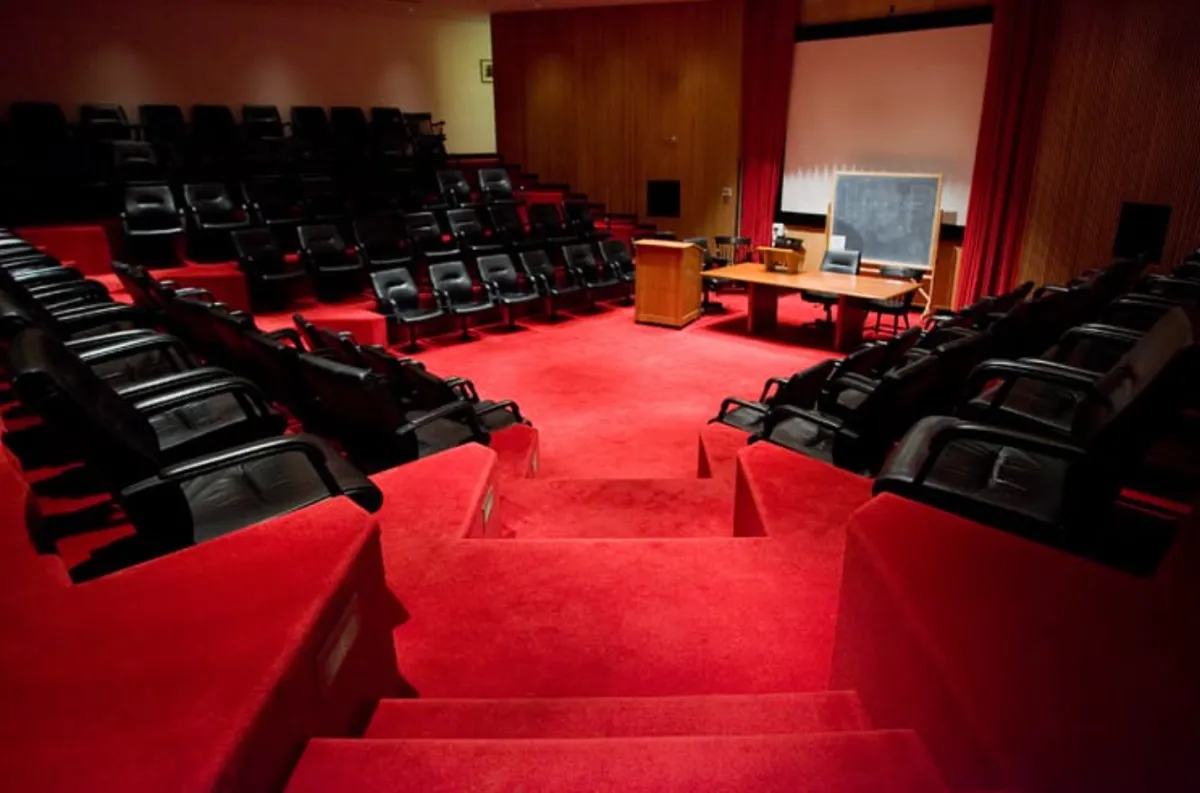
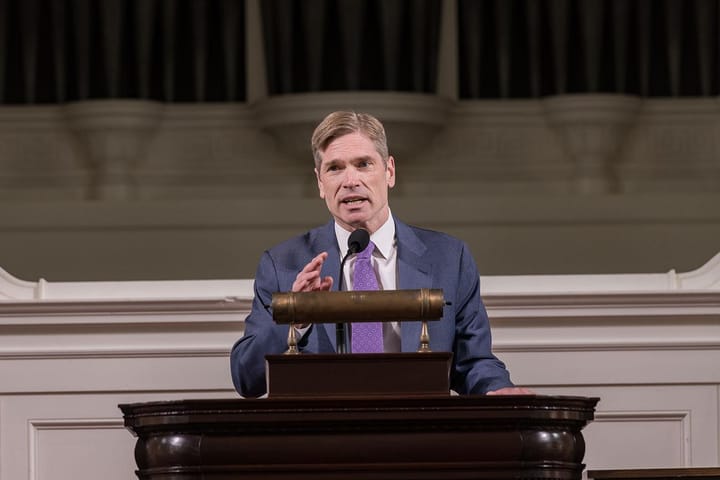
Looking at another policy concern, this Monday, we met with Vice President and Dean of Admission & Financial Aid Matt McGann, the Dean of Admission & Financial Aid Dale Hendricks, and Professor of Chemistry and the chair of the Faculty Committee on Admissions and Financial Aid (FCAFA) Mark Marshall to discuss potential changes to the test-optional policy that Amherst College has had in place since its 2020-2021 admission cycle.
Dean McGann gave a presentation on the current policy, which allows students to opt in or out of submitting standardized test scores (SAT or ACT) and recognizes that “standardized test scores cannot fully capture the many facets of our diverse applicants, [and thus admissions] carefully consider[s] all components of an application in an effort to derive the most accurate and contextual depiction of an applicant as a student and a person.” The testing policy is also under faculty governance, according to the Statutes for the regulation of the Faculty.
McGann showed us statistics on applicants, admittees, and enrolled students who did or did not submit scores, as well as some contextual information about Amherst’s high diversity in racial, ethnic, and socioeconomic status among its peer institutions even before it changed from test-required to test-optional.
FCAFA and McGann held listening sessions for the faculty about the test-optional policy and will continue hearing opinions and having conversations about the policy and any potential switches to a test-required policy. McGann emphasized two points throughout the presentation: They have made no decisions on the policy and, if test-required replaces test-optional, they will ensure that the holistic admissions process stays put — scores will be evaluated in an applicant’s context and not the most important consideration for admission.
Our senators asked McGann, Hendricks, and Marshall questions about general faculty thoughts, our commitment to socioeconomic diversity, how to ensure applicants with strong test scores in context will apply if test-required returns, and much more. We appreciate the three for attending our meeting and answering each question with care. If you have any questions or remarks concerning a potential change to a test-required admission policy, please reach out to our FCAFA members, Tony Wang ’29 and Dania Younies ’28.
Harking back to a previous issue, the Social Engagement (RAVE) Committee, AAS Secretary Micah Scott ’29, and Supik met with Director of Student Engagement and Leadership (SEL) Torshia Maxwell and Associate Director of SEL Katie Davin on Nov. 6 to discuss the fall rave and what led to its inevitable shutdown. The meeting included conversations around the presence of Five College students at the event, increased tent sizes, improvements to the rave’s flow and setup design, and other ways to enhance the student experience at the rave.
We understand the widespread appeal of a “make-up” rave this semester, as shown through the 432 people — 91.7% of the total respondents to the Google Form we sent out — who expressed interest in attending another rave this semester. The SEL team promised to bring this idea forward to senior leadership, although it seems highly unlikely that another official rave can happen this semester due to logistical and time constraints. The RAVE Committee is planning to host another event, however, in February in lieu of a “make-up” rave. We recognize that students going abroad in the spring will not get to experience this event, and we apologize, although it’s the most feasible option at the moment, and we hope students will enjoy its inclusion as a fun event for the beginning of the semester.
This week, we also appointed our Town-Campus Relations committee members, Beckett Lawrence-Apfelbaum ’29, Divine Adelufosi ’30, and Markus Luis ’30, who are very excited about transforming the relationship between the students and the Town of Amherst. We’ve also chosen our at-large member and will contact the student soon with further details. If you have any ideas or suggestions for what the committee could do, please reach out to one of the listed members.
The last update comes from the Budgetary Committee (BC). AAS Treasurer Mikka Wolff ’27 presented several proposed changes to BC policy with three aims: expanding the total discretionary funding, codifying an existing emergency funding process, and ensuring that small price changes won’t prevent clubs from having purchasing meetings or hosting events. We will now allocate 30% of our budget to discretionary rather than the previous 20%. The 10% increase will be reflected in a 10% decrease in club budgets, which BC has reviewed and believes will not impact any clubs since it is “unspent money.”
As for the emergency funding policy, here’s a direct quote of the language: “In exceptional cases, the Budgetary Committee may provide emergency funding for certain requests not exceeding a dollar value set by the Budgetary Committee. Said dollar value shall not exceed the purchasing power equivalent of $500 in September 2024. Emergency requests shall be made in writing to the Treasurer or a member of the Budgetary Committee. Emergency funding can be made at the discretion of the Budgetary Committee without the approval of the Senate.”
BC may now also officially allocate money from discretionary funds to Student Engagement and Leadership’s purchasing staff and their meetings with clubs to account for “reasonable and minor” price changes for approved BC requests.
We will be writing again soon to share more important information, and please contact us through email (ctufenkji28@amherst.edu or jsupik27@amherst.edu) or in person.
Comments ()